Informing Redesign from Design Principles
Design Principles are foundational values that help frame design decisions. When facing an increasing amount of complex clinical data and new partnerships, my design team struggled to just “squeeze” new content and features onto the existing frame.
Challenges
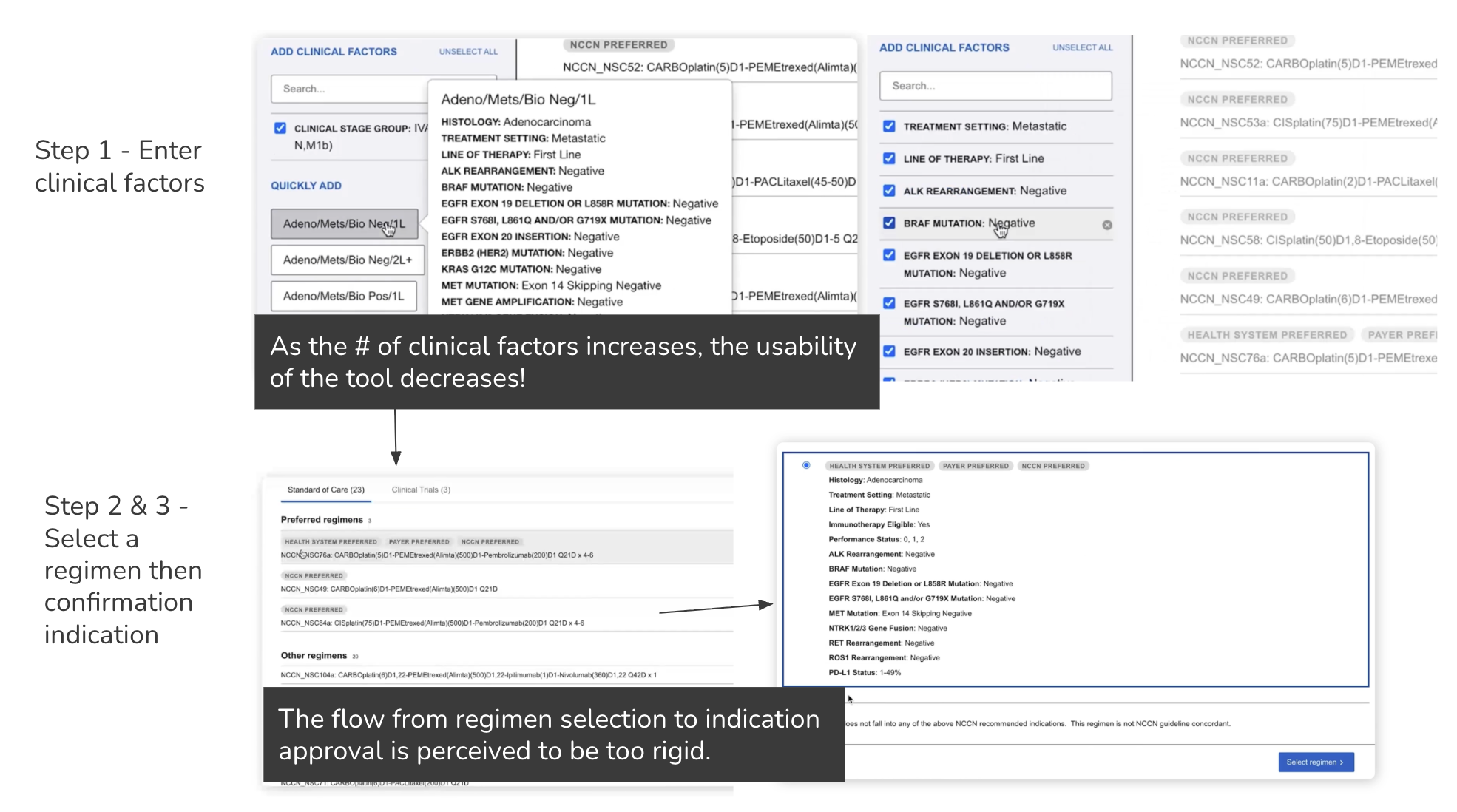
Quick iterations piled up into messy UX patterns that slowed the team down. The layout no longer supported our expanded use cases. More importantly, as the tool became more complex, they had yet to flex the muscle to make tough trade-off decisions. On the other hand, my design team was feeling overwhelmed with the flood of new requests from partnerships and multiple feature backlogs. I realized we needed new tools and guidelines to align on some fundamental decisions. My stakeholders had varying degrees of familiarity with Design Principles, they questioned the ROI of such time investment during crunch time. Getting their buy-in required numerous one-on-one sessions and an effective demonstration of value. However, I saw the expanded team struggle to collaborate; we were accumulating product design debt with each subpar feature addition. Something had to be done!
My responsibilities
Spearheading the effort to create Design Principles with 5 designers on my team via interactive workshops. Building alignment with cross-functional stakeholders, showing the value of this exercise, and coaching them on how to critique design with these design principles.
In parallel, coaching 1 senior designer to lead the redesign effort with 1 junior designer supporting design systems & interaction design patterns. The small SWAT team had 6 weeks to create the initial demo for the clinical content partner. I helped set the collaboration rhythm with PM, Eng, Clinical & DI leaders.
Guiding, critiquing, suggesting new design patterns, to eventually signing off on all design decisions throughout this process.
Through some fun workshops and cross-functional feedback sessions, we established clear values to guide our design decisions for the new era. First, we drafted some guiding considerations for this exercise that would help the team make important decisions along our design journey and reflect the team's vision and values.
Good design principles are written as a team
Good design principles are memorable
Good design principles help you say no
Good design principles are broadly applicable
The Iterative Process: Discovery - Alignment - Craft
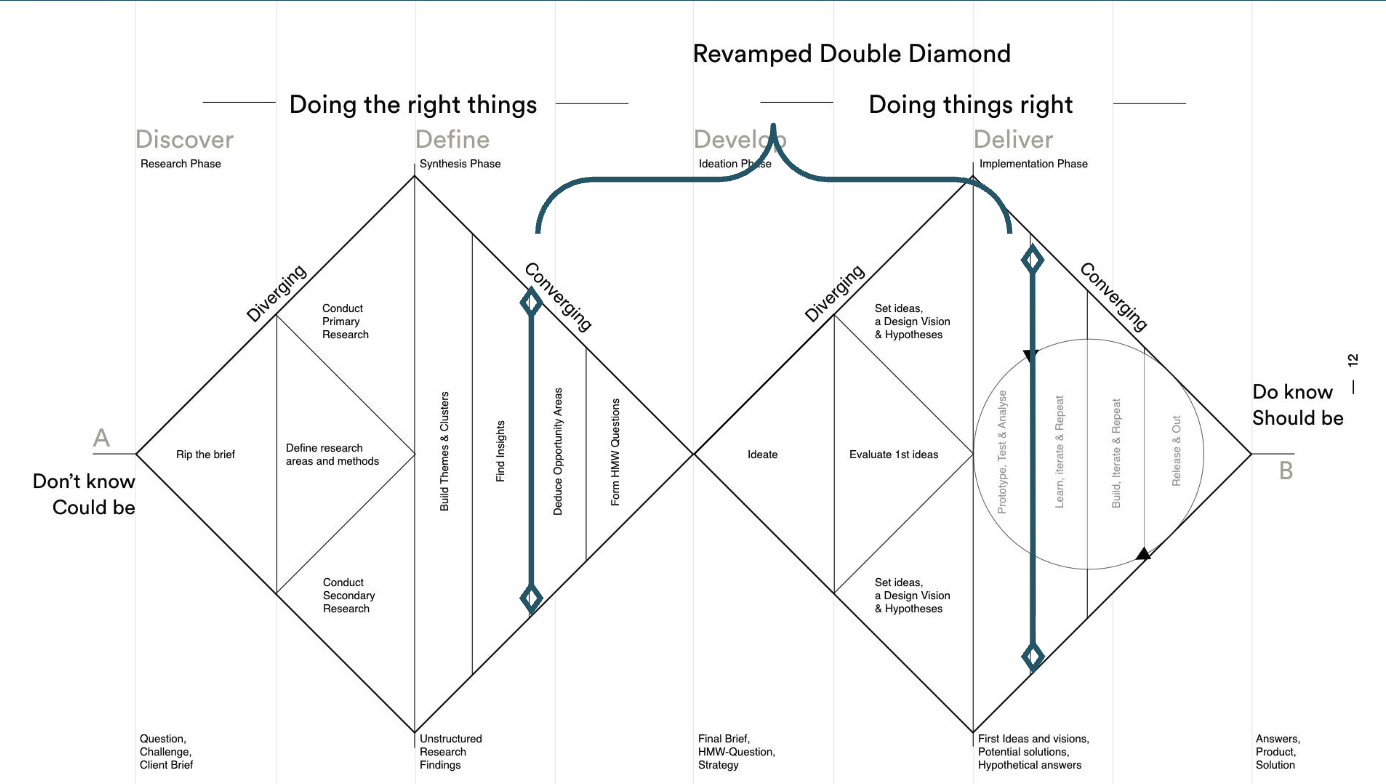
Before we started the redesign and the discussion of Design Principles, it was critical to align on the broader opportunities and prioritized clinical scenarios so that the larger team could agree on the most important problems we ought to be focusing on. Dana Faber also provided us with lots of clinical case studies, we needed clinical team’s help to translate them into languages that the cross-functional team can shape and prioritize!
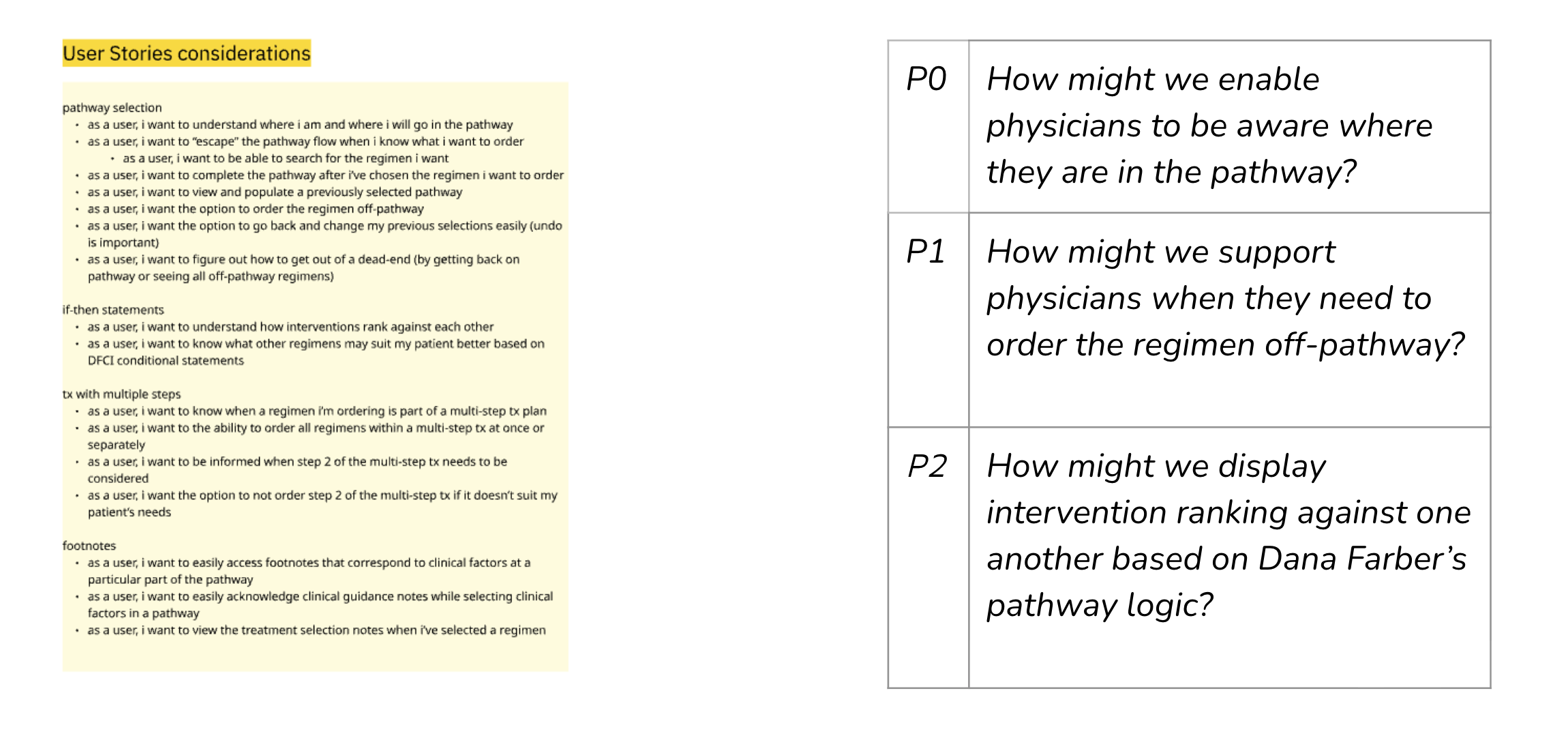
From user stories to HMW statements
Design Principle Working Sessions:
Identify the core value mix
During one of our company-wide all-hands meetings, I gathered my team in person to address the identity crisis of our product. After setting the stage and explaining the WHY, I introduced the brand archetypes wheel to the team. A brand’s personality is a set of human traits that represent the product’s value and attributes. The 12 brand archetypes guided our thinking initially without making each designer feel defensive. Very quickly, several themes emerged from the brand's personality.
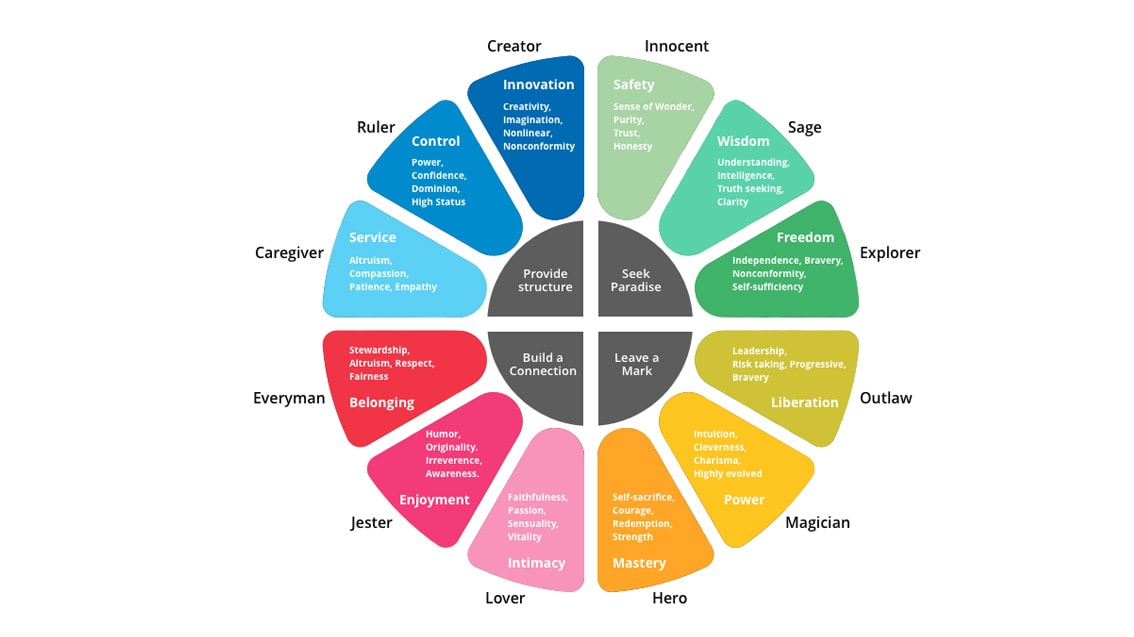
What does Flatiron Assist’s (FA) target audience desire from the tool? Who is FA if it were a person? What are the main characteristics/attributes?
Two brand personalities stood out the most: The Caregiver as the primary, and the Sage as the secondary. The votes were almost unanimous. The next step was to merge the two groups of attributes to identify specific intersections where our foundational values can be best articulated.
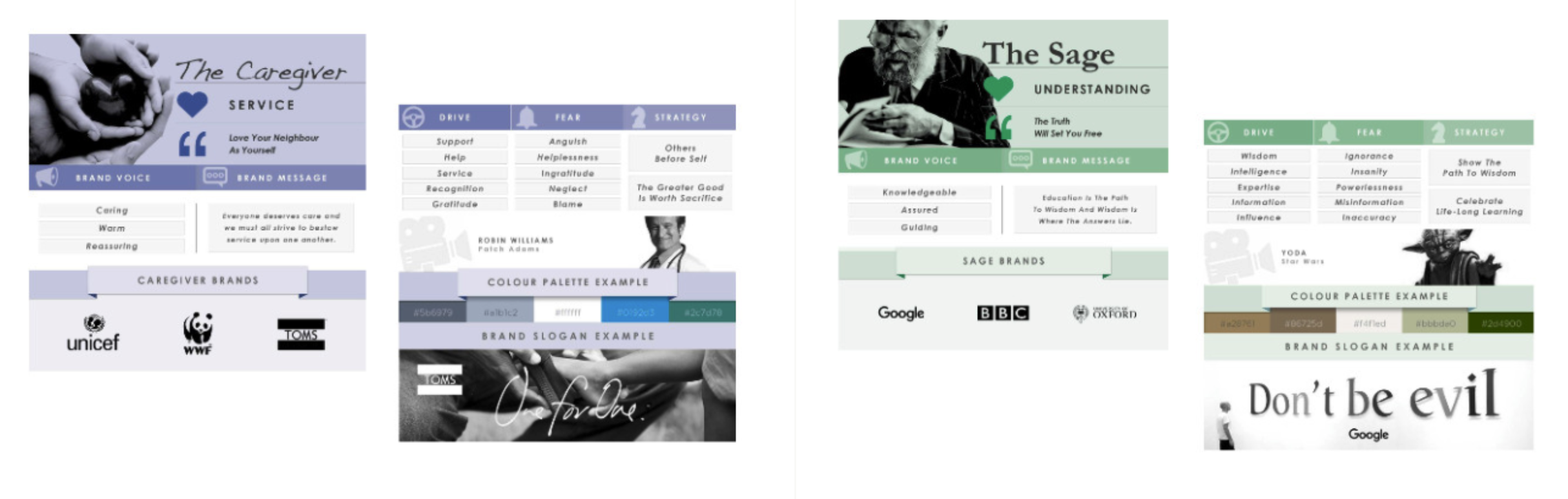
2. Articulate Enterprise Software Design Process
For the second session, we talked about how designing enterprise software is different than designing for consumer applications.
How does the design process differ? What are the unique considerations?
We summarized three aspects that make our design process different:
a. Embrace modularity. Design everything with a view that it is meant to evolve and grow. Instead of just concentrating on creating tailored components for the current need, lay equal emphasis on making them adaptable and scalable to future needs.
b. Establish order and process. Excellent collaboration, solid customer research, actionable problem statements, and focused design iterations are often expected, but it’s very hard to achieve them all each and every time. Your best bet is to set up a repeatable process and make improvements to it with each cycle.
c. Think holistically. Always be aware of how your designs and additions are affecting the overall product and the company’s vision. Having a holistic approach to everything you build, add or upgrade will automatically lead to a coherent & consistent product experience.
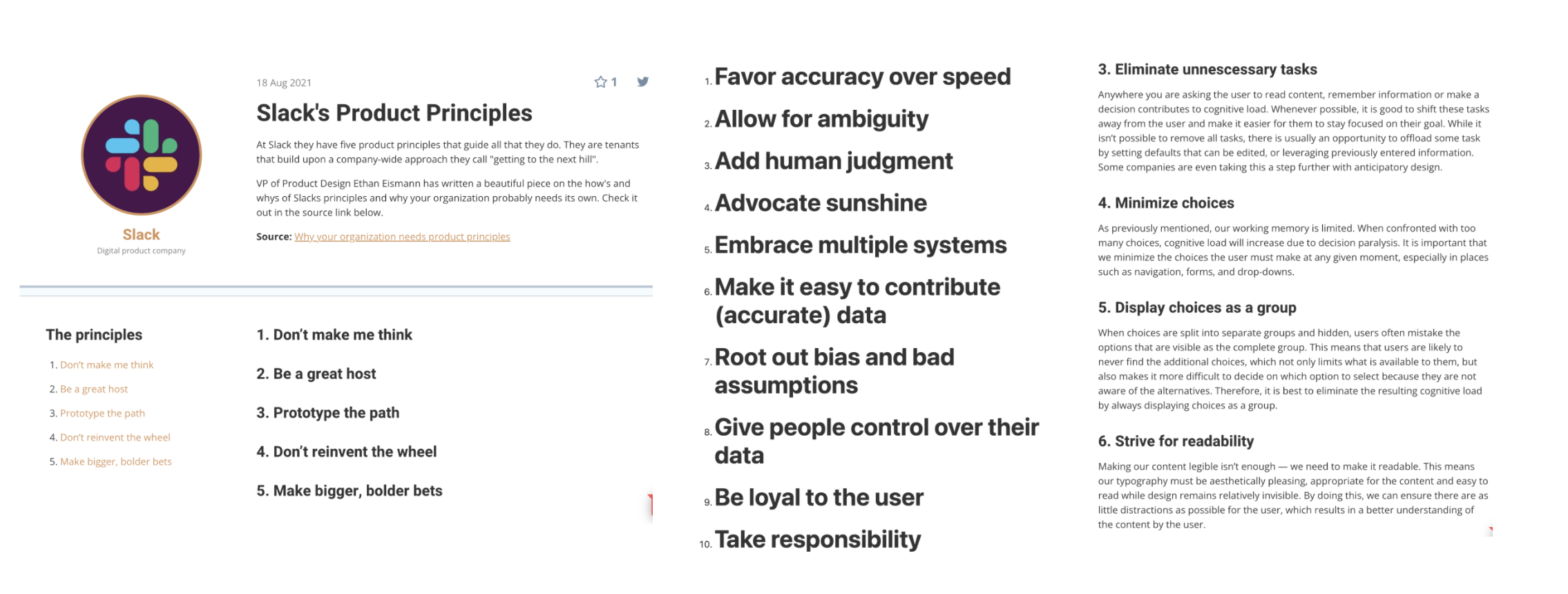
3. Collect examples of Design Principles
For the third session, I asked my team to find inspiration from other products and companies. The problem we were facing was not unique, how might we best express the values to guide design decisions? How might we build cross-functional alignment with team stakeholders? What are the examples we can model after?
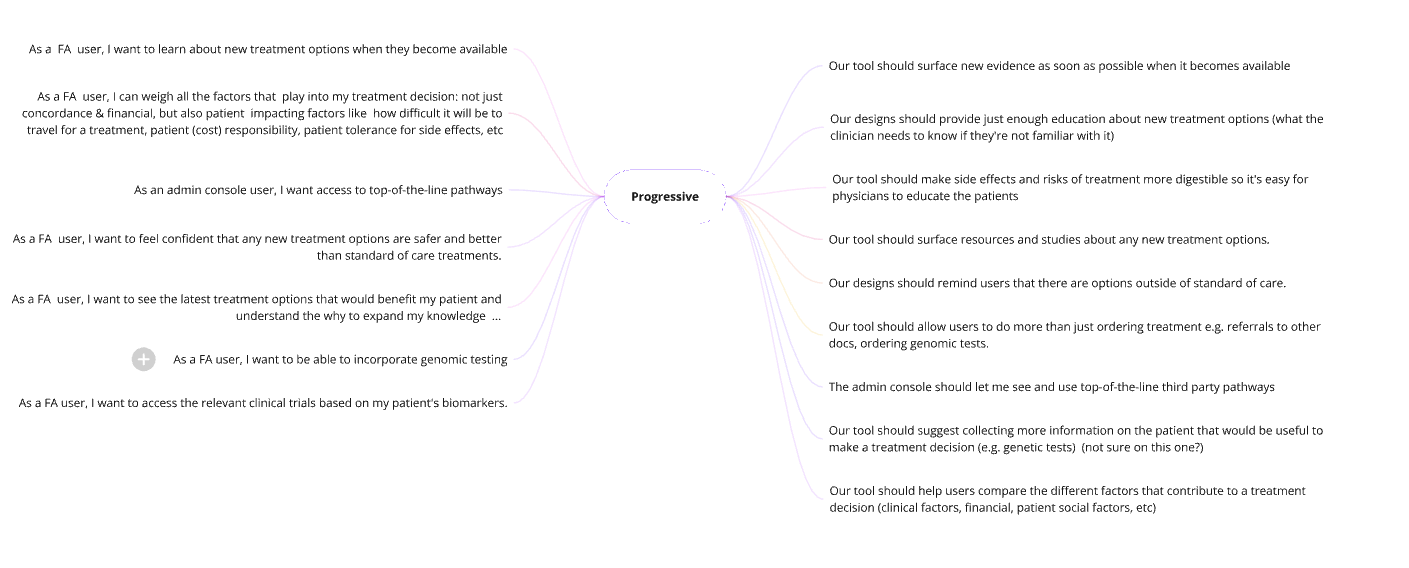
4. Mind-mapping of our users’ expectations
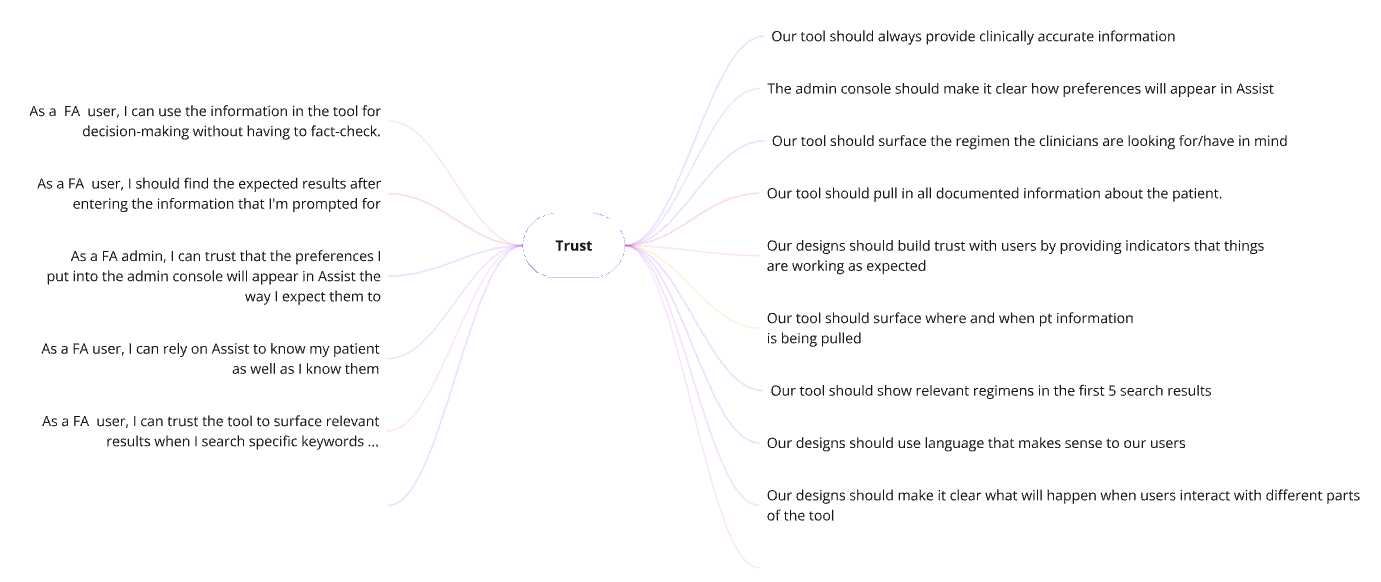
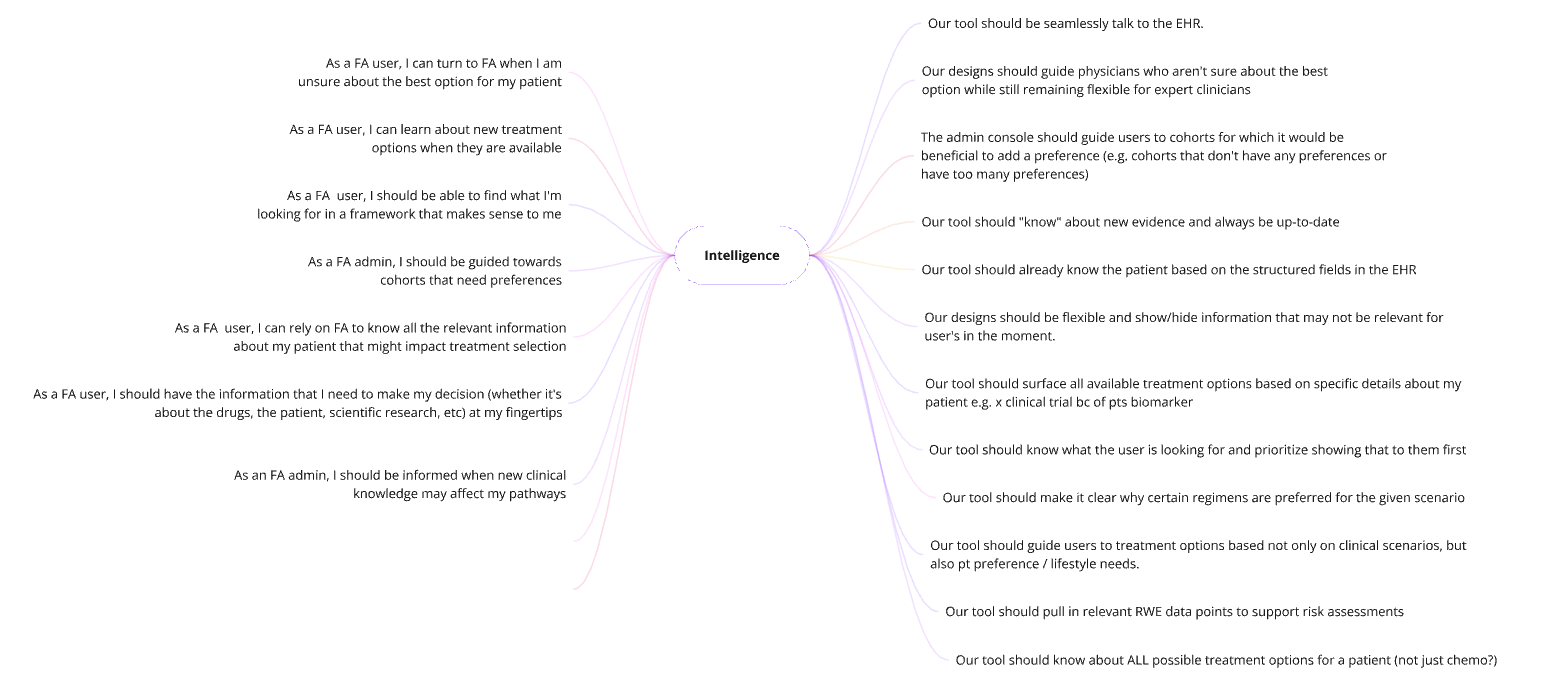
For the fourth activity, we brainstormed individually and collectively on our customers’ expectations. This was not a feature backlog, but the values that resonated based on numerous user interviews and design feedback sessions.
What does it mean for FA to be TRUSTWORTHY, INTELLIGENT & PROGRESSIVE?
5. Develop the Design Principle Themes
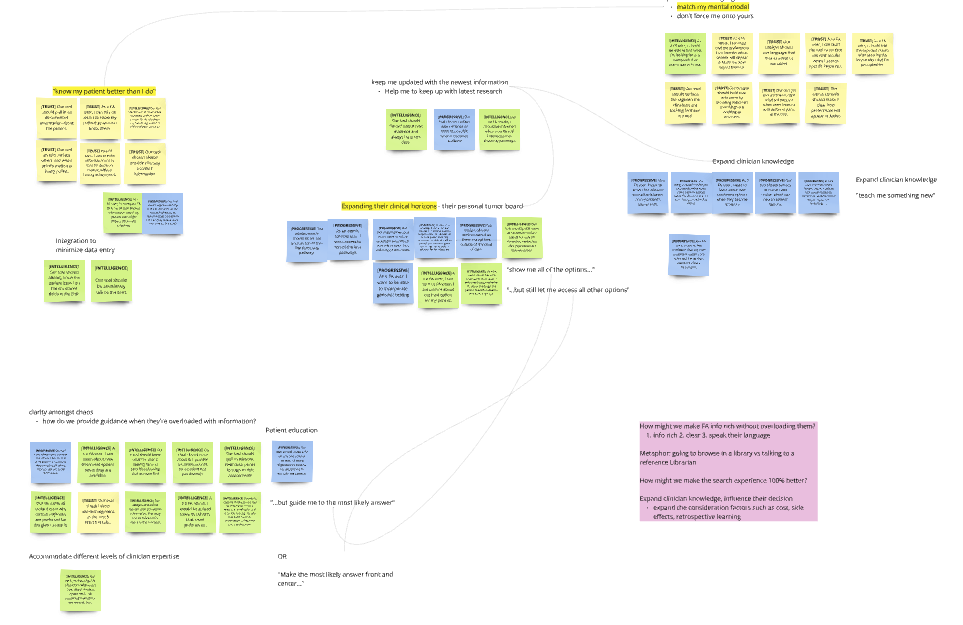
After massive divergent thinking, we needed to converge on basic themes from the previous activities. Each designer on my team took part in translating the mind-mapping exercise into values on sticky notes. We then grouped the stickies, identified the core themes, and discussed the relationships among them.
6. Synthesize the findings to create Design Principles
There is a clear benefit to brainstorming with a large group of participants; the process of synthesizing and distilling information is quite the opposite because we wanted to come up with language that is crisp, pithy, and memorable. I spent some alone time synthesizing and then collaborated with another designer on my team to bring this process to the finish line. In addition, I met with various cross-functional stakeholders to introduce the concept and the process individually in order to build internal buy-in before socializing with the larger team.
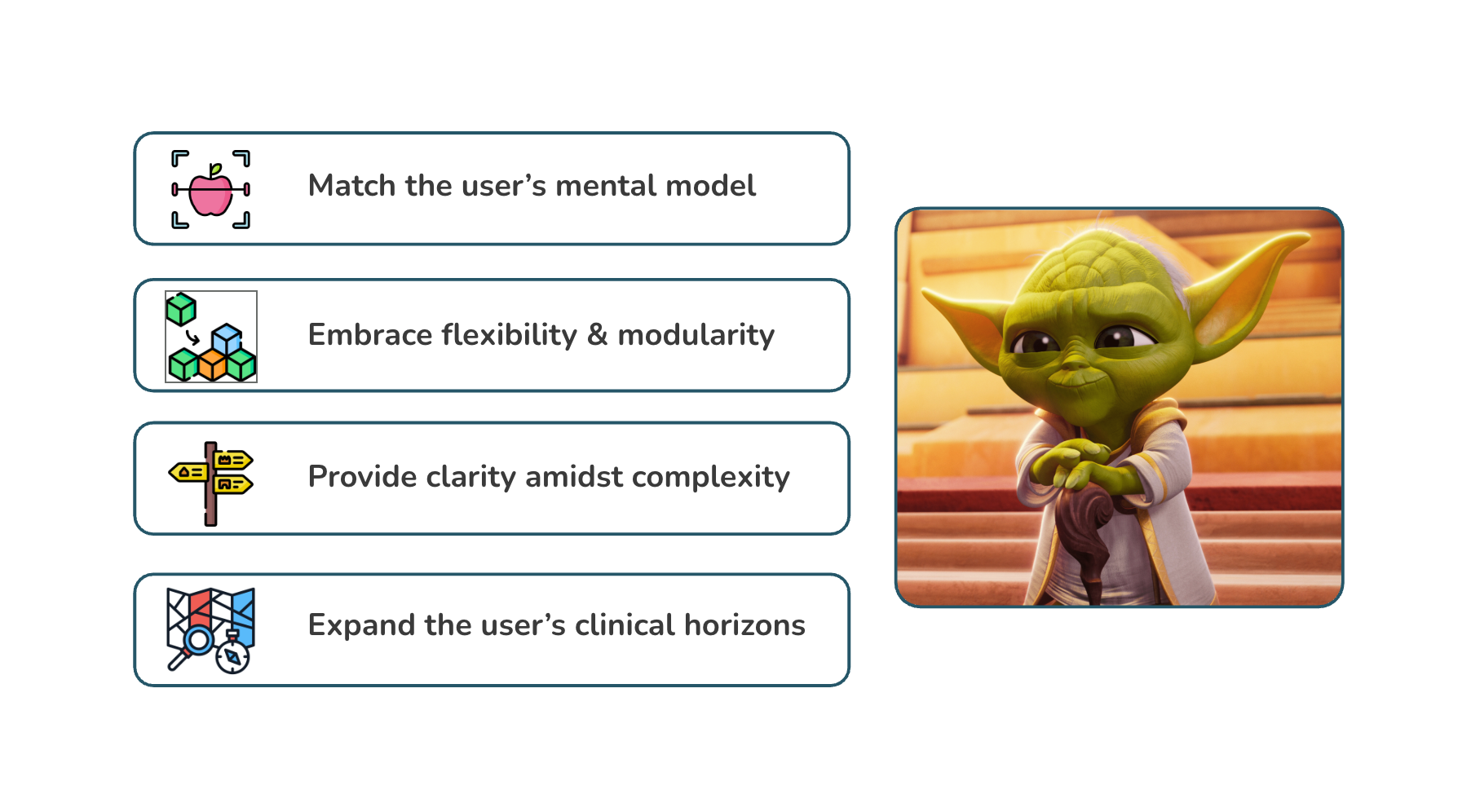
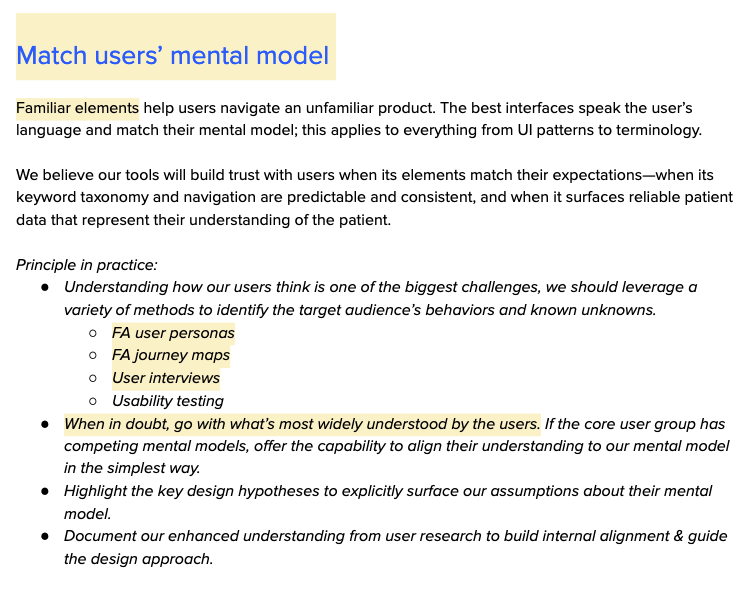

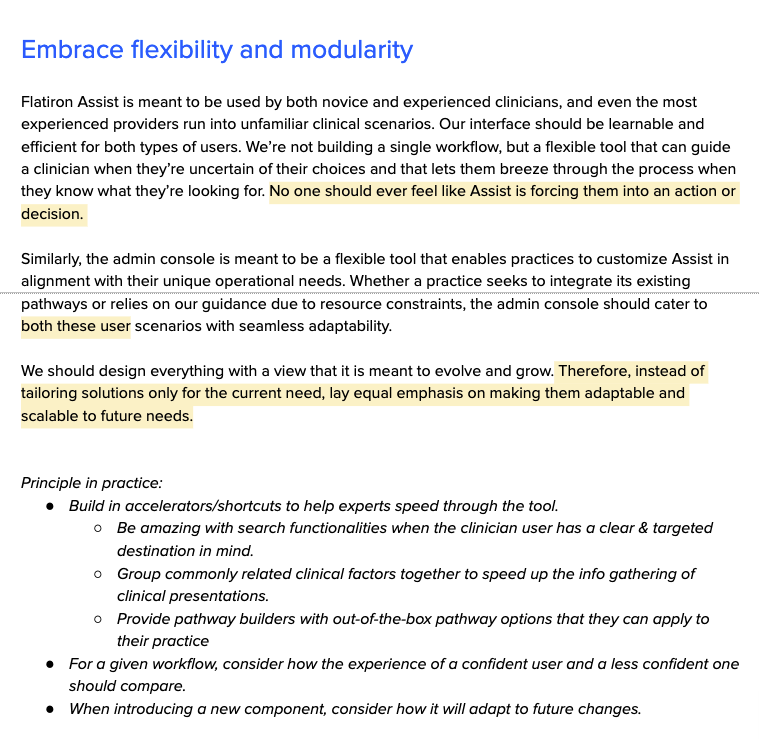
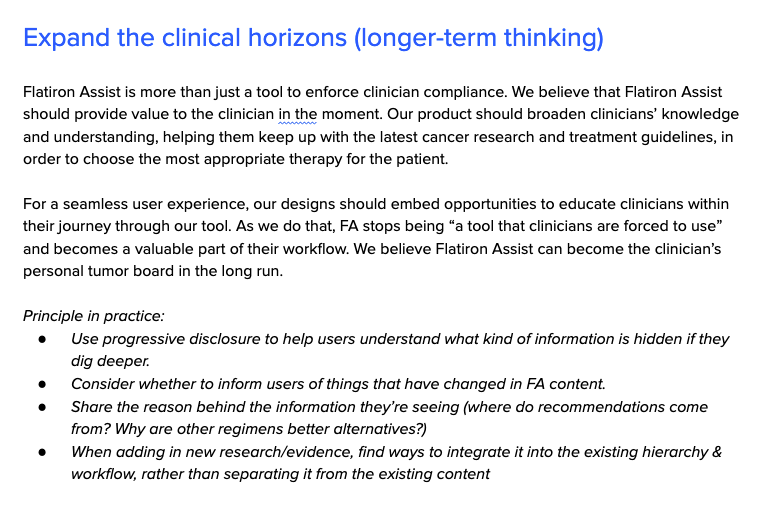
Food for thought: One of the loudest pieces of feedback from my cross-functional partners was the need to guide them tactically during design critique sessions. I realized that knowing the values cannot necessarily accelerate decision-making for the whole group. We decided to include the Principle In Practice section under each Design Principle, and separately, we conducted function-based alignment + Q&A sessions where I broke down the WHY, WHERE & SO WHAT to establish a shared understanding both strategically and tactually.
Design Principles Made Redesign Easier
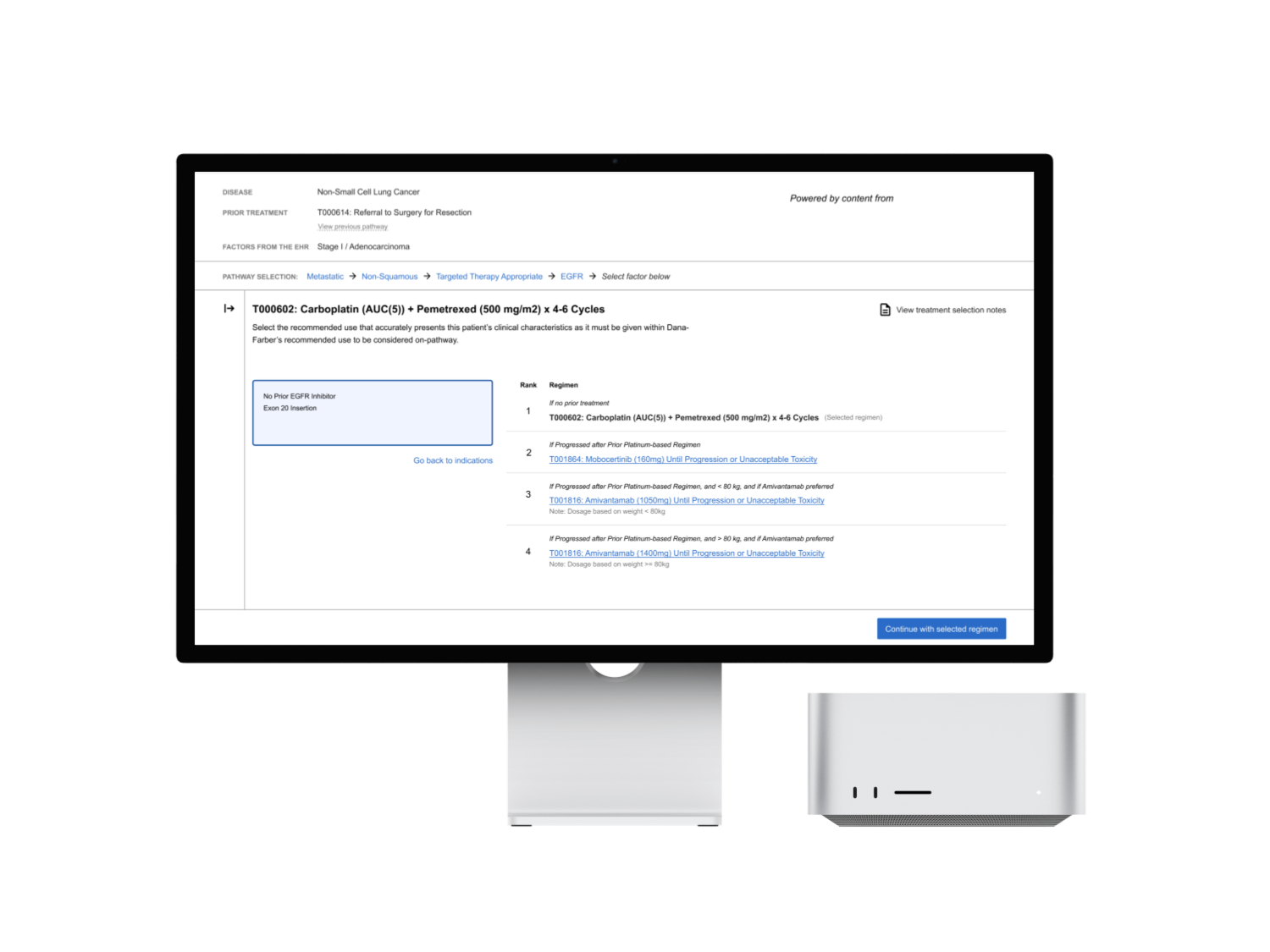
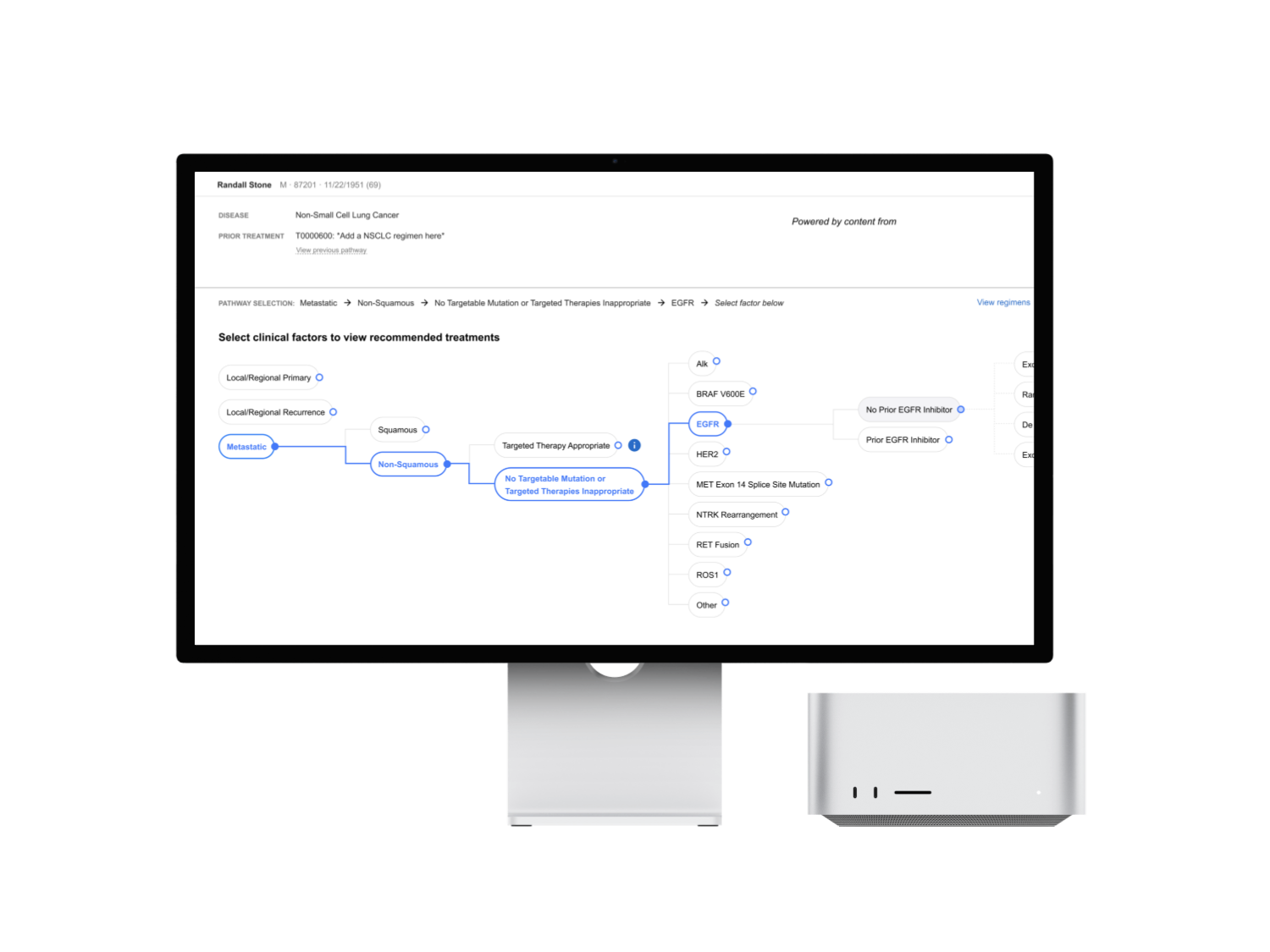
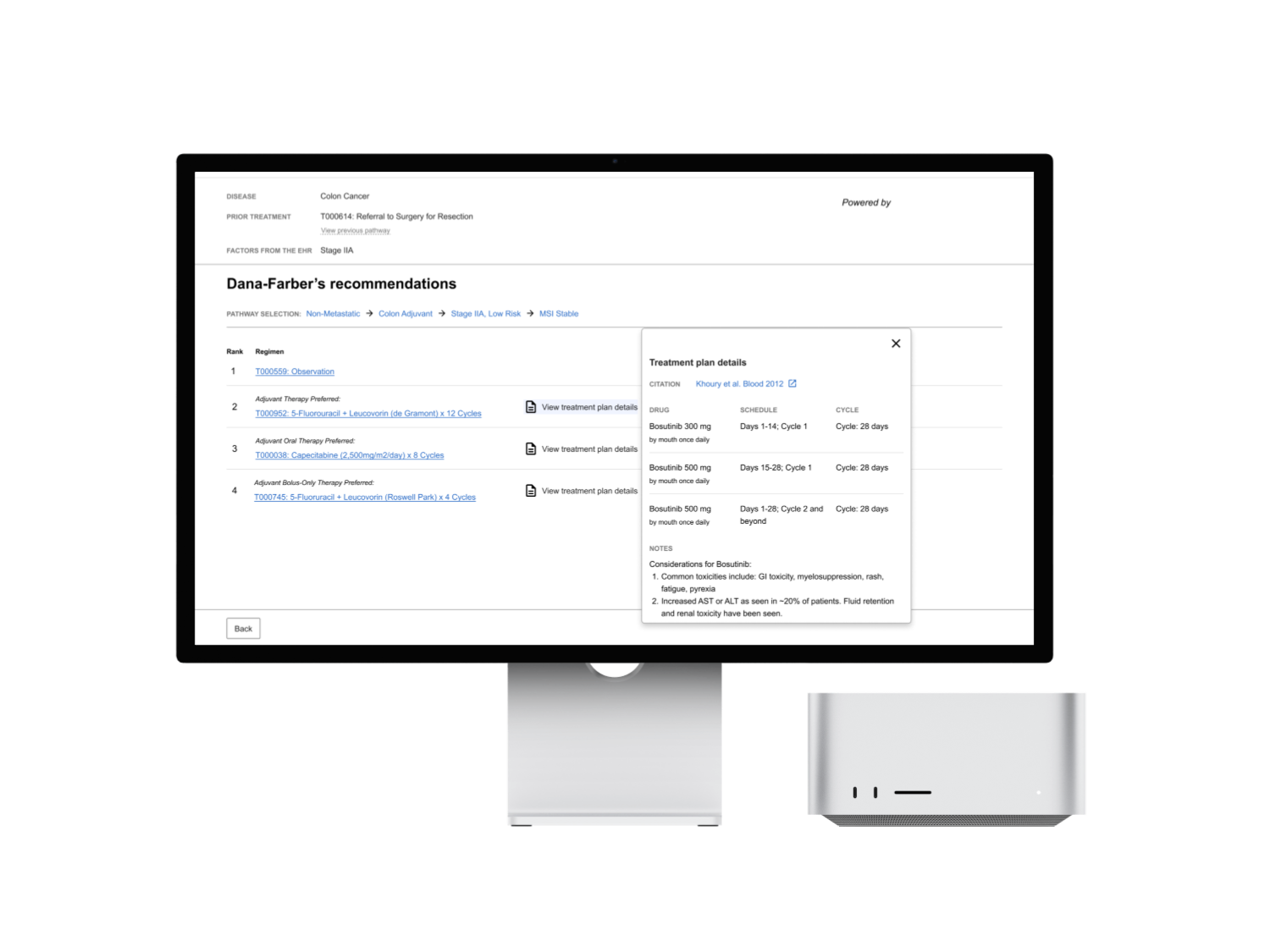
The design principles resonated with so many team members and stakeholders because we all felt our product had gradually lost its user-centricity. We believe no one should ever feel like Assist is forcing them into an action or decision. Flatiron Assist is meant to be used by both novice and experienced clinicians, and even the most experienced providers run into unfamiliar clinical scenarios. Our interface should be learnable and efficient for both types of users. That wasn’t the case before the redesign, experienced doctors found the tool too cumbersome to use. In order to build a more scalable solution, especially in the wake of the content partnership with Dana Farber, I asked my team to re-imagine the information architecture of the application with flexibility and modularity in mind.
How might we enable physicians to be aware of where they are? How might we allow the experienced users to “escape” the pathway flow when they know what they want to order? How might we support physicians when they need to order the regimen off-pathway?
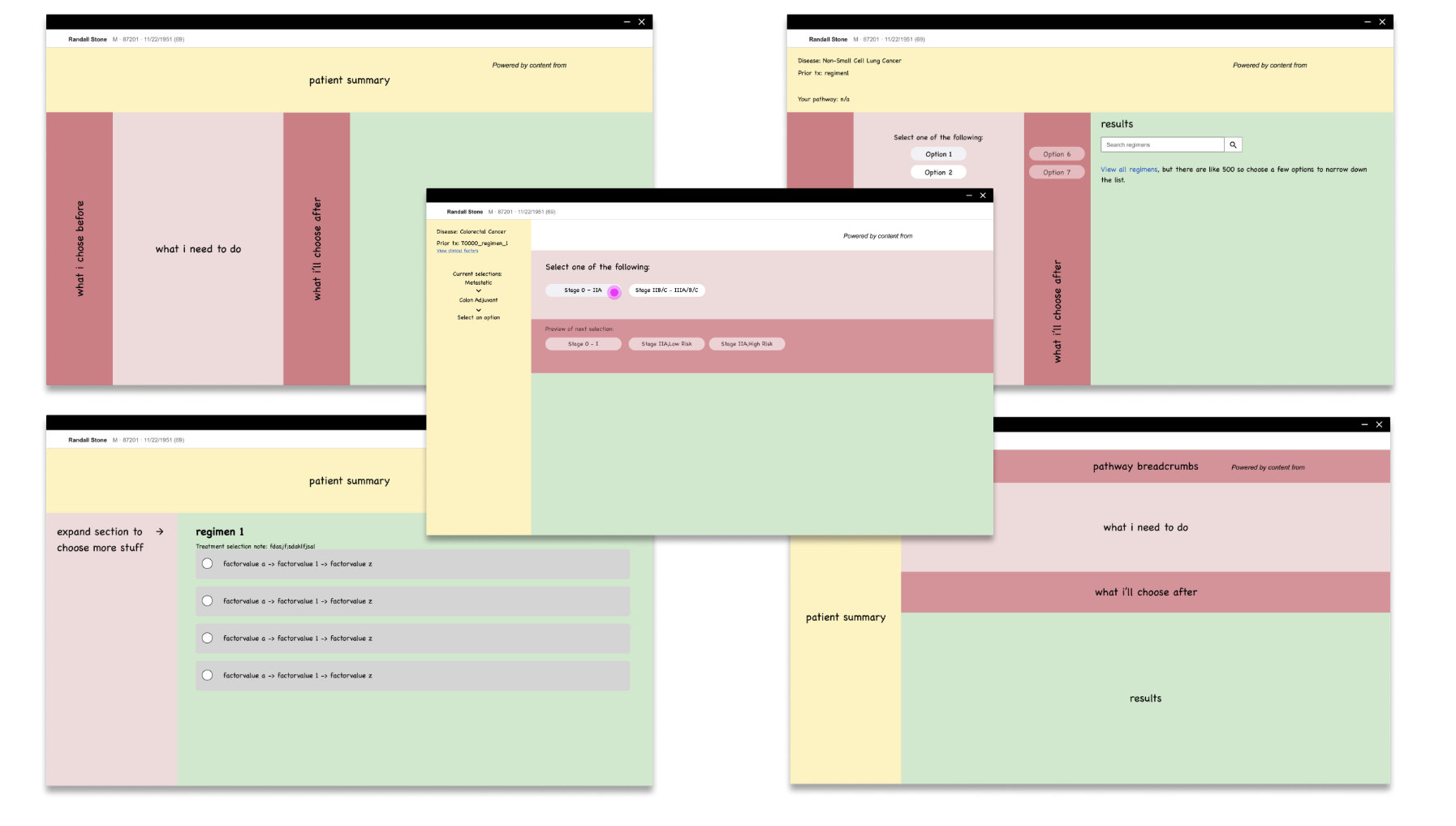
Once the team explored the fundamental layout options, it opened up the possibilities to consider how new interaction patterns and new pathway logic can better support physicians’ workflows.
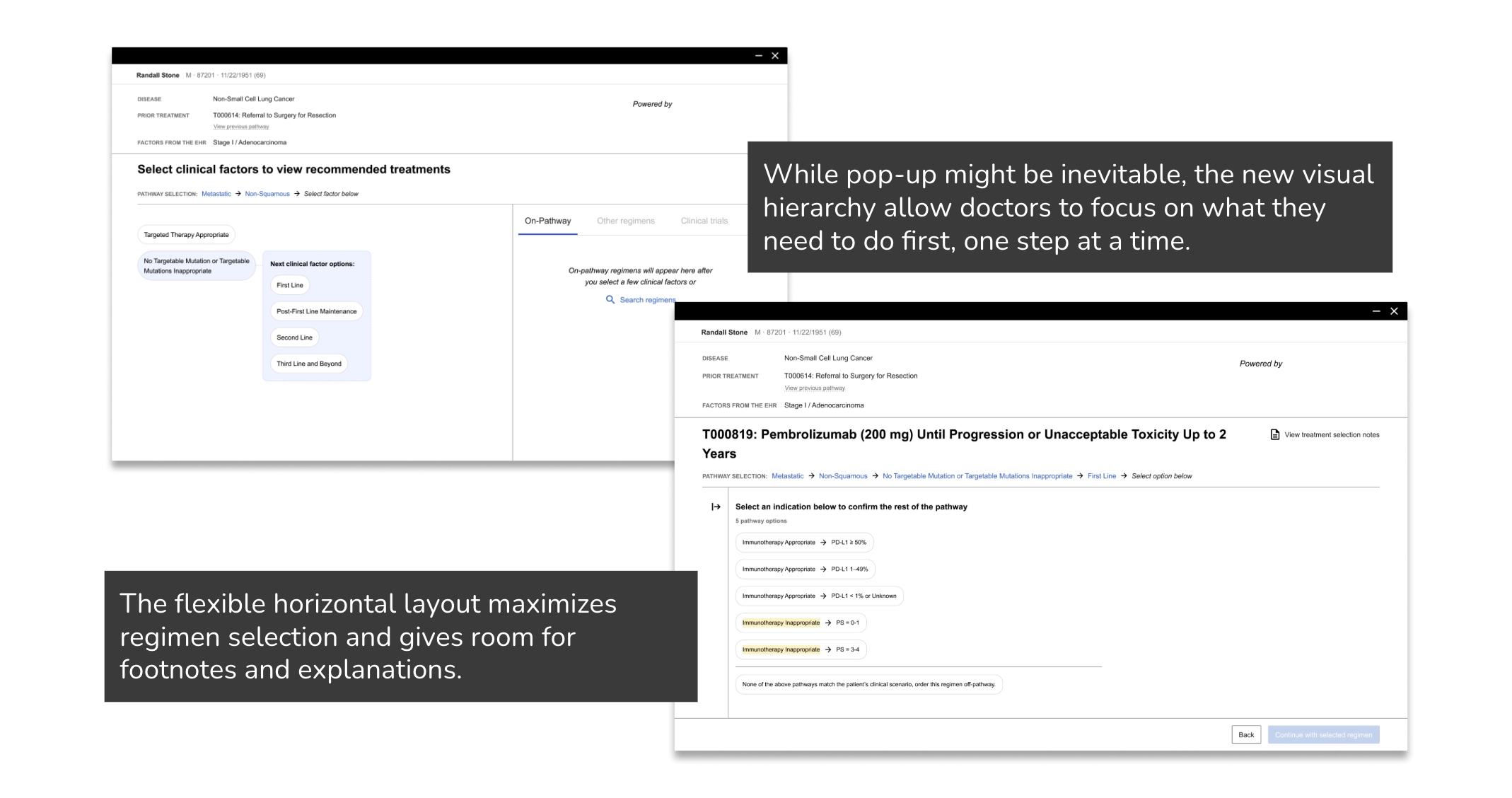
The “After State” of the Redesign
Key Impact and Outcome
The team navigated a period of intense change, marked by rapid shifts and uncertainty. The impact was visceral — and extended far beyond the design work itself.
Immediate Outcome
External validation: The Dana-Farber Pathway team responded positively to the MVP demo and agreed to move forward, validating the direction and accelerating next steps.
Clinical adoption: Internal clinicians were energized by the new concepts, with early usability testing showing increased user satisfaction and confidence in the approach.
Stronger cross-functional practice: FA team members increased the frequency and quality of cross-functional critique sessions, applying shared design principles across design crits and product strategy documents (PSDs).
What It Enabled
Design influence beyond product: The design team partnered directly with marketing and sales, launching a buyer survey that informed and reshaped the product roadmap for the next 6–9 months.
Strategic clarity: The concept of “expanding the clinical horizon” sparked meaningful leadership discussions and helped clarify the team’s long-term product strategy.
New collaboration model: The design pairing model was well-received and expanded as an experiment into other product areas.